
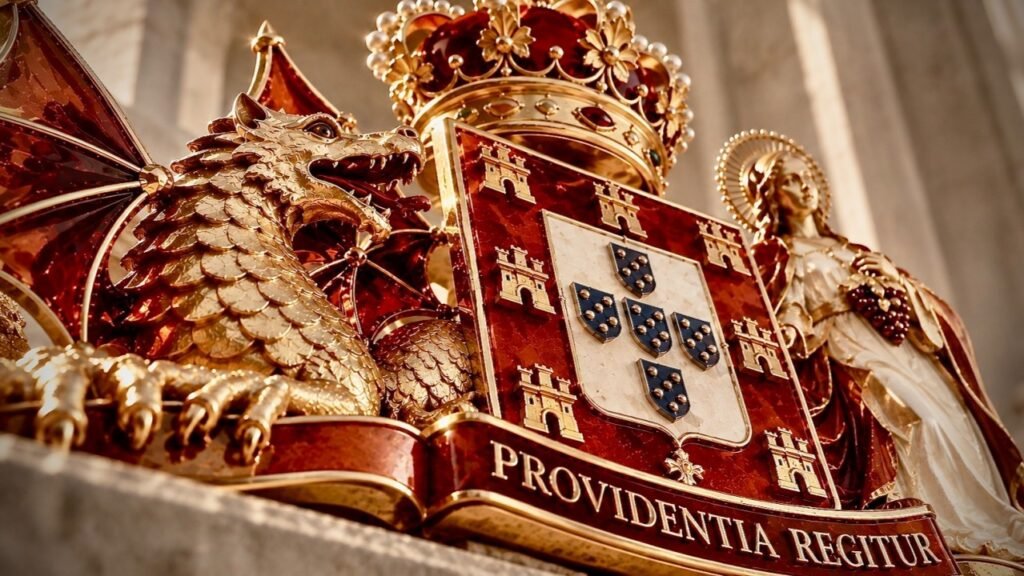
How ROYAL OPORTO reconnected its foundations with contemporary relevance.
What do you do with a brand that is 270 years old? With ROYAL OPORTO, the problem certainly wasn’t a lack of heritage. Through Real Companhia Velha, founded by Royal Charter in 1756, its history is intertwined with the foundations of the Douro and Port itself. Its royal connection wasn’t added later as a branding device. It was part of its origins.
The challenge was making this extraordinary legitimacy work harder for the brand today. ROYAL OPORTO didn’t need reinvention. It needed a reboot. And there is an important difference.
Reinvention asks what a brand could become. A reboot asks what is already powerful, why it has stopped connecting, and what needs to evolve to make it relevant again.
MORE THAN A PACK REFRESH
The most visible issue was the pack. Aesthetics had moved, premium codes had evolved, and a design that had felt appropriate a few years earlier increasingly belonged to another visual era. But the deeper issue was connection.
ROYAL OPORTO’s historical credentials were not being fully translated into contemporary consumer motivations and occasions. The brand had powerful codes of authority, recognition and status, but these weren’t doing enough to create a reason to choose it today.
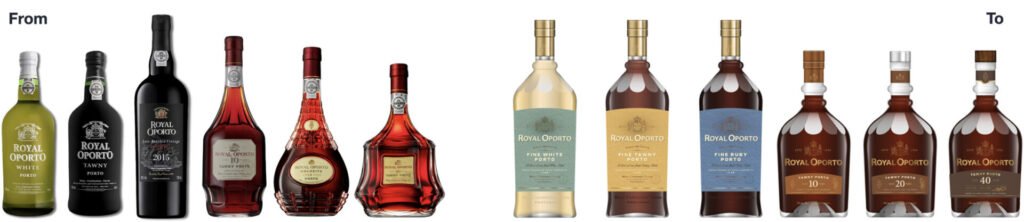
The portfolio had also evolved into two different visual worlds: a traditional standard range and a more elaborate premium range. The link between them was no longer clear. Without much media support to explain the difference, consumers could easily see two different brands rather than one range. In trying to premiumise, the brand had become harder to understand.
This changed the question. We weren’t refreshing the brand simply because it looked dated. The business needed the portfolio to migrate towards greater value, while the existing architecture wasn’t making that progression sufficiently clear or coherent.
UNDERSTANDING BEFORE EVOLVING
Brand Reveal’s role was to drive the strategic process: understand the situation, clarify and position the brand, translate that into the packaging brief, advise on the creative proposals against it and help building alignment on the proposed routes.
We brought together internal perspectives, competitive analysis and portfolio performance, then deliberately looked at some familiar information differently: volume and value contribution, portfolio economics, competitive packaging maps and alternative readings of the category.
The objective wasn’t more analysis for its own sake. It was to challenge established interpretations. Sometimes the purpose of analysis is to make people ask a better question.
A small cross-functional team then worked through consumers, motivations, occasions, benefits, brand values, portfolio roles and future opportunities. Rather than brainstorming from scratch, we brought hypotheses and frameworks into the discussion for people to challenge and improve.
CLARIFYING BEFORE POSITIONING
There was already extraordinary material: a foundational relationship with the Douro, royal lineage, authority within the category, expertise in aged Tawnies and almost three centuries of accumulated credibility.
The question was how those assets could connect with a contemporary consumer motivation. The work led towards a territory around achievement, recognition and status, articulated through “Rewarding Excellence.”
This points to an important principle when working with established brands: Heritage is evidence. It isn’t necessarily the proposition.
“Since 1756” can tell people why they should believe you. It doesn’t necessarily tell them why they should choose you. Positioning connects what is distinctive and legitimate about a brand with something people care about today.
FROM POSITIONING TO DESIGN
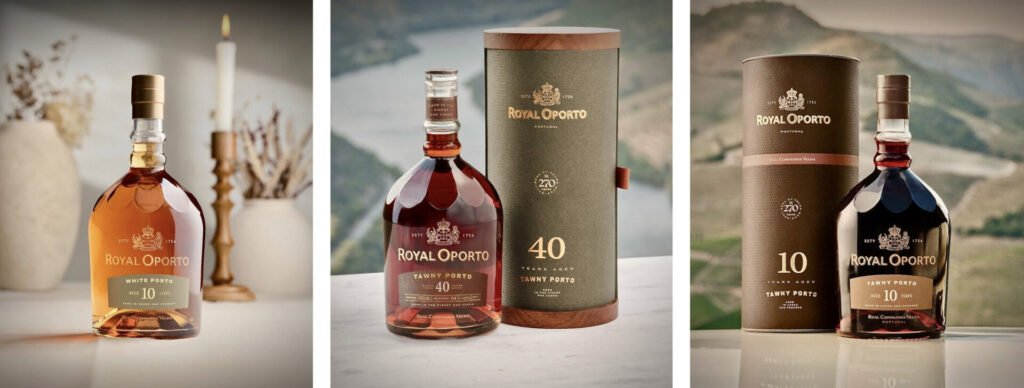
The positioning gave us a clear framework for the packaging brief. The objective was to bring the range together, create a clearer progression towards higher-value Ports, and express the brand’s status in a contemporary way — while retaining its recognition and heritage.
We started with the bottle architecture, as it defines the physical language of the range, before moving to the graphic expression. The creative proposals could then be assessed against clear strategic criteria, rather than design preference alone.
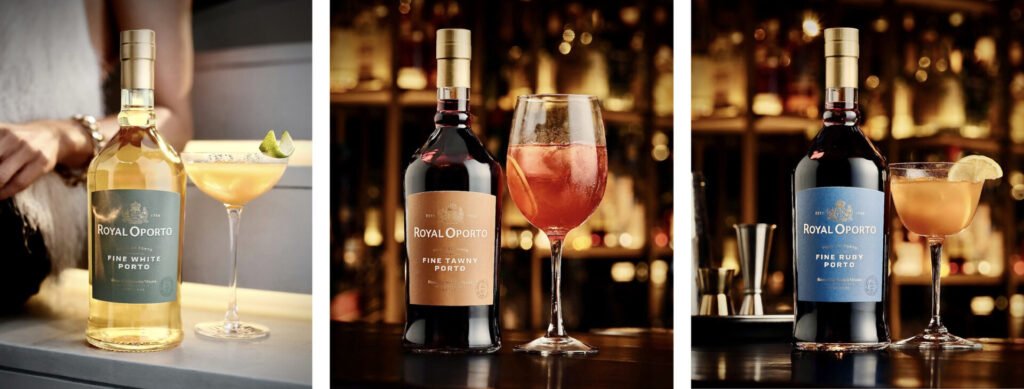
The result is a more cohesive portfolio: different products and levels of status, but clearly one ROYAL OPORTO family. Distinctive at each level. Coherent as a brand.
SOME LEARNING AND TIPS
For marketers managing established brands, the ROYAL OPORTO case reveals broader issues.
- Don’t assume you need a new story. Your strongest one may already exist but need reconnecting to contemporary motivations and occasions.
- Don’t confuse heritage with relevance. History is powerful evidence, but it still needs to support a reason to choose the brand today.
- Don’t let premiumisation fragment the brand. Build a ladder, not a collection of increasingly unrelated premium products.
- Don’t protect familiarity instead of equity. Identify which codes genuinely carry recognition and meaning — and which remain simply because they have always been there.
Perhaps three questions are worth asking of any established brand:
- What do we have that competitors cannot legitimately reproduce?
- Why should that matter to consumers today?
- Which parts of our current expression amplify that or get in the way?
ROYAL OPORTO’s extraordinary history provided the foundations. The reboot connected them with contemporary motivations and gave them a coherent expression across the brand and portfolio. The real power of heritage is making what has always made a brand special matter today.
Brand Reveal is a network of senior specialists in drinks strategy and marketing. We’re only 10 years old — young compared with many of the venerable brands we work with — but we know (quite9 a few things about giving “old” brands fresh momentum.